
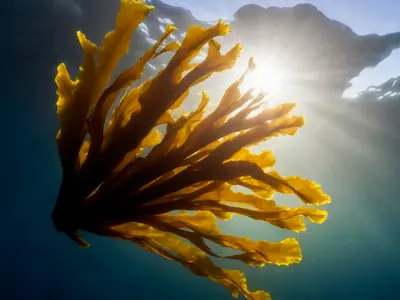

Summer School Marine Botany
This master degree summer course is a hands-on introduction to marine plants with an emphasis on seaweeds. It trains you to recognise and identify the typical marine algae in various coastal habitats. The organisms are studied in their environment during field trips, and also in vivo back at the laboratory. These studies form the foundation from which the main issues in the systematics, biology, ecology and evolution of marine flora are addressed.
This summer course is primarily open to Master’s and PhD students, as well as third-year undergraduate students. A few seats are also open to professionnals. This summer school is part of a teaching unit (UM4MRM52) in the Master’s degree programme in Marine Sciences of Sorbonne University. The course is taught in English.
The course instructors are lecturers and researchers specialising in marine plants :
- Nathalie Simon (Sorbonne University)
- Christophe Six (Sorbonne University)
- Jean-Charles Leclerc (Sorbonne University)
- Conxi Rodríguez-Prieto (University of Girona, Spain)
- Line Le Gall (CNRS)
- Florence Rousseau (Sorbonne Université)
- Andrés Ritter (CNRS)
URL de Vidéo distante
Course detailed content
Topics covered in class:
- Introduction to the systematics the main algal groups
- General morphology, anatomy, cytology, reproduction, ecology of green, brown and red seaweeds
- Introduction to the pigments of the green, brown and red seaweeds
- Life cycles and ecology
Fieldwork:
- Exploration of various coastal habitats; rocky, sandy/muddy
- Analysis, identification of typical species (algae and marine plants)
- Analysis of habitats and the effect of biotic and abiotic factors on species distribution (vertical zonation of seaweed, exposure to waves, nature of the substrate, etc.).
Practical laboratories:
- Observation on live material under microscopes and dissecting microscopes (cytology, anatomy, reproductive structures)
- Analyses of pigments
- Practice in using species identification keys
- Introduction to the use of genetic characters
- Analyses of adaptative traits of halophyte plants
Independent study and projects:
- Production of illustrated botanical fact sheets : contribution to the production of a list of native and introduced species that grow in artificial habitats (leasure harbor, Roscoff)
- Preparation of herbarium sheets
Skills gained and Certification
Through this course, students should be able :
- Analyse and describe the morphology and anatomy of algae and marine plants using the appropriate vocabulary
- Identify and interpret the reproductive structures of algae
- Identify differences in pigmentation among algal groups
- Point out the characteristics relevant to identifying algae and use identification keys
- Explain the limitations of morphological characters for species identification
- Explain the importance of genetic characters
- Point out the adaptations of coastal marine plants
- Distinguish between the main types of seaweed and marine plant communities in the field
Course certification
The course is part of the Sorbonne Université - Science of Universe, Environment , Ecology Masters program and the student can validate 6 ECTS units. The exam grade is based on an oral presentation and a botanical fact sheet submission.
Contact(s)
- Nathalie SimonResponsable de l'UE
- Christophe SixResponsable de l'UE
Contact(s)
- Cécile CabresinInformation inscription
Link(s)
Pre registration FormINSCRIPTIONS
You are a student
Papers, registration fees, all the infos
You are a professionnal
How to apply ?
Practical infos
Gears to bring, accommodation and catering on site